
Stone Harbor Beach Access threatened ?
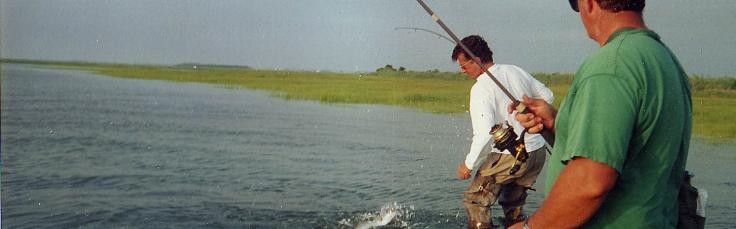

Being a South Jersey fisherman I started making bucktails for several reasons.
1) to save money
2) to utilize every bit of a deer that I or someone else harvested
3) more rewarding to catch a fish
4) to add the details and colors unavailable at the tackle shops
At the end of the day we all love to catch big fish and they don’t come often. Tying your own bucktails can certainly help give you an edge. When a person makes their own bucktails, it’s easier to match the hatch . It’s extra special when you see your family, friends and youngster’s catching fish on something you have created. I am very thankful for learning the art of bucktail tying. I encourage others to try it out.
Chip Gruff
I caught well over 100 keeper flounder last season. All of them were caught using a very detailed constructed bucktail and rig. This makes a tremendous difference in a flounder’s response, when he sights the lure.
Chip Gruff is a very successful salt water fisherman. He has won and placed in numerous tournaments. Summer flounder being his forte. His custom bucktails contain details that will increase the catch rate significantly, over common store bought bucktails.
Chip is the executive chef at Key West Tacos in Cape May, NJ. If you are in Cape May, stop in and say hello to Chip. The food is excellent.. You will also find an assortment of Chip’s extra bucktails for sale.
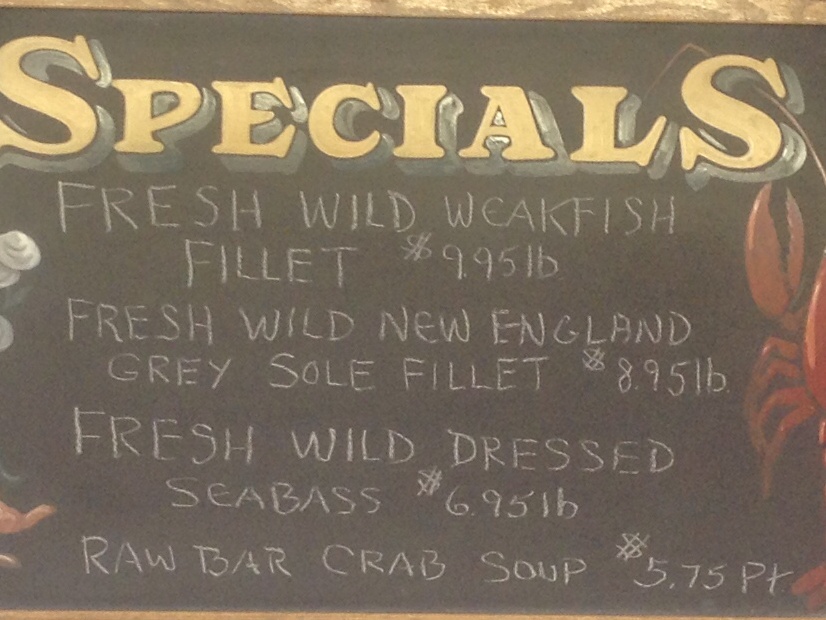
I was checking out at the seafood counter, when the chalkboard menu caught my eye,wild weakfish 9.95 LB.. Here is how the menu read to me, a completely incompetent, Atlantic States Marine Fisheries Council weakfish board. In retrospect the ASMFC has made some horrendously bad weakfish management decisions over the years. Allowing a market for weakfish at this point just highlights their failures.
The commercial fishermen themselves supported a moratorium on the sale of weakfish, until the population was completely rebuilt.
Ironically, it was a recreational fishing group that fought against the weakfish moratorium.

As I set my coffee cup down this morning, I spotted the silhouette. I reached for my binoculars to get a closer look. Wow, a paddleboarder making his way across the bay and no ice!
I can not tell you, how much I love the undisturbed winter view . This area is part of the North Atlantic fly way, thousands of migratory birds visit. Checking them out is how I start the day. However, I am ready for the spring view.
I am waiting for the arrival of the red winged black birds.
A sure sign of spring.

Stone Harbor 96 street bridge

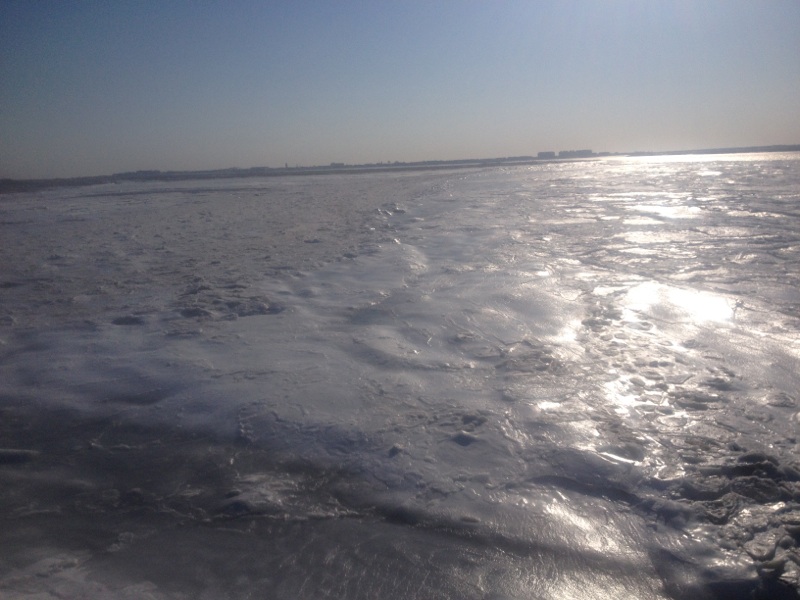
Herferd Inlet , looking south from the free bridge .
There will be no fishing today.
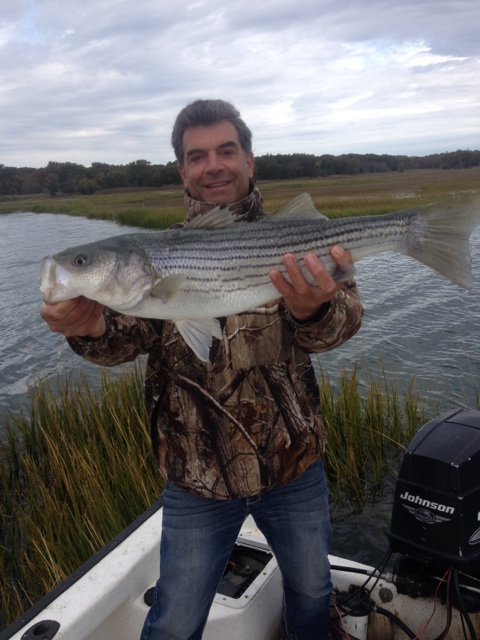
There is striped bass fishing, and there is striped bass fishing in the Cape May’s sounds.
Jarvis and Taylor sounds hold a fantastic number of resident striped bass. I have caught them year round, including January and February. Not sure why stripers only winter in these two Cape May County sounds. When the water heats up in the summer, these are go-to spots also. It could be the proximity to deep water, just outside of cold spring inlet. I have caught them from 42-78 degrees. The fish are very reliable, mater of fact, you can expect an 85% success rate. Once you learn how to fish the area. Couple this with light tackle, beautiful clean calm waters and big striped bass. You will find yourself with very little interest in fishing for striped bass anyplace else.


In 2009 the NJ Federation of Sportsmen and others lobbied hard for a saltwater fishing license. The license would have created a reliable, dedicated funding source for NJ marine fisheries. Dedicated accounts have been setup by NJ legislators for numerous projects and causes,from cancer to dredging. However, the money is not protected, it is on the table during budget time. Usually disappearing at this point.
Recreational fishing interests and a State Senator, push hard against a NJ saltwater license. They claimed five dollars was too much to pay for the license. They warned of the money being diverted/stolen,like other dedicated accounts. They promised other ways to fund New Jersey marine fisheries. License plates, State budget and others, all of them have failed. Their decisions,choices and responses were based on 90% of the available information. The 10% of information they chose to overlooked, held the correct compass heading for New Jersey Marine fisheries.
Here is a big part of the 10%:
“Federal regulations under 50 CFR Part 80 would apply to saltwater fishing license funds. These dollars would be provided the full protection of federal law, and could not be used for any purpose other than the fisheries work of NJ DFW. My office, and the OIG enforce these regulations – it is a big part of what we do. Over the past two years I have personally intervened in close to 20 attempts to divert license revenues or assets acquired with those funds across the 18 agencies in our region that receive Wildlife and Sport Fish Restoration dollars. We take this responsibility very seriously, and have, to date, prevented diversions.”
– John F. Organ, Ph.D., CWB
Chief, Division of Wildlife and Sport Fish Restoration
Adjunct Associate Professor of Wildlife Conservation, UMass Amherst
U.S. Fish and Wildlife Service
Today’s sad Rartian Bay oyster situation (NJ side), is a direct result of not having a saltwater fishing license in New Jersey. See NJ.com for story.
New Jersey’s failure during the February ASMFC meeting to improve summer flounder management, was in part, due to the lack of a saltwater license fund. New Jersey’s representatives showed up without any scientific data whatsoever! This was a very expense loss to the tourist industry and fishermen.
Red drum and speckled-trout have really taken a hit also, due to the lack of funds.
The NJ red drum commercial harvest remains unlimited, making it impossible for them to recover fully. NJ does not have the money to declare an interest in speckled-trout. They have absolutely no scientific data on the fishery. New Jersey’s conservation officers are so understaffed at this point, it threatens the entire seafood industry. Especially with the poaching from Newark Bay and other highly polluted areas.
A reliably funding source for New Jersey marine fisheries is long overdue. The only way it will happen in this state, is with a saltwater license fund.

We needed him yesterday
Dana !
State Assemblyman Bob Andrzjcak gave his full support to South Jersey saltwater fishermen at the Atlantic State Marine Fisheries Council meeting. Tom Fote Governor Chris Christie’s appointee, also made a passionate plea to the council members. Adam Nowalsky represented New Jersey also.He is an artist at public speaking and very knowledgable in fisheries management, he addressed the council. However, the council had no interest whatsoever, in anything New Jersey had to say, one member was texting.
The south Jersey summer flounder region options were overwhelmingly voted down. The Atlantic States Marine Fisheries Council is made up of representatives from all the Atlantic coast states. Muscle from New Jersey’s Governor Chris Christie and Federal legislators, coupled with NJDEP,NJMFC is needed for this lift.

There is a tremendous difference between New York/North Jersey and the Delaware Bay /South Jersey waters.
The water temperature between North Jersey and South Jersey , especially in the back bay areas is significant at times . This in-itself makes it impossible to set fair flounder regulations managing north and south Jersey as one management unit. The species found and size, also indicates a significant difference. For example, in South Jersey we catch black drum, speckled sea trout and red drum* . These species are not found in North Jersey, New York or Connecticut in fishable numbers. However, they are found in Delaware, Maryland, Virginia and South Jersey. Delaware and South Jersey fishermen fish the same exact spots. Like the Delaware Bay and atlantic ocean spots like the old grounds. Yet, they are held to different regulations. Delaware fishermen enjoy regulations that are in tune with the area, that includes a 16 ” keeper size and a 365 day season. South Jersey fishermen are held to regulations based on science derived from the New York area, that calls for a 19″ keeper and a much smaller season, that opens at the wrong time. Summer flounder management and the South Jersey tourist economy will be significantly enhanced with regional option 3A. The State of Delaware has benefited economical at the expense of New Jersey, due to insufficient summer flounder regulations.
For the reasons above, I urge you to support and lobby for region option 3A see below:
Regional Option 3-Split New Jersey Option 3A This alternative proposes the State of New Jersey be split in half, establishing north and south portions. The northern portion of New Jersey would be included with the current Northern Region of New York and Connecticut while the southern portion would be included with the Southern Region of Delaware, Maryland and Virginia. The line of demarcation would occur around Little Egg Inlet with Great Bay included in the Southern Region keeping New Jersey counties intact. Table 6. Regional Option 3A with example management measure Example bag limit:
North Jersey, New York and Connecticut * 19″ 5 fish 128
South Jersey, Delaware and Maryland* 17″ 4 fish 365 days
NJ ASMFC Rep
Assemblyman Sgt. Robert Andrzejczak
609-465-0549
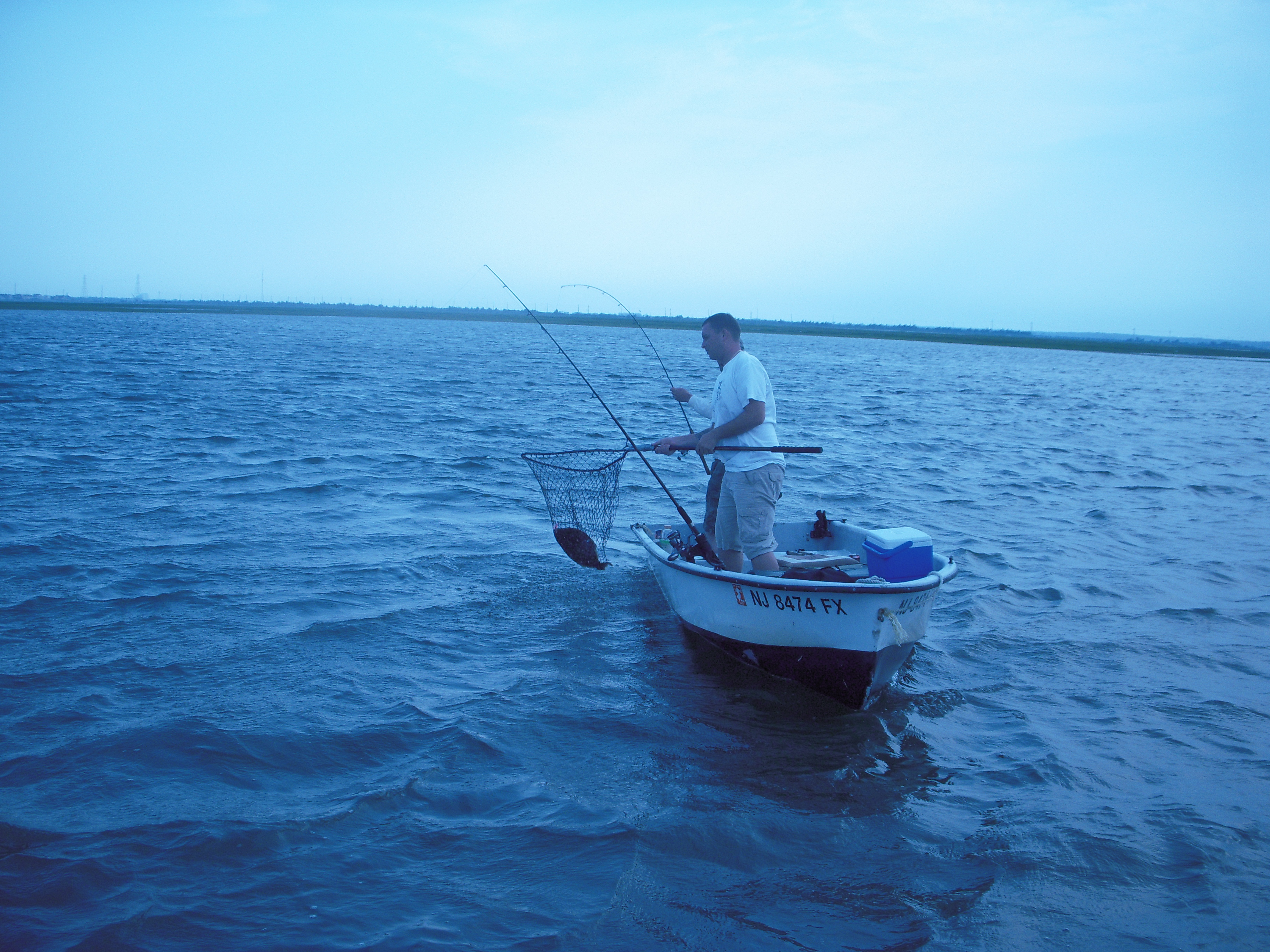
The ASMFC is considering a proposal to create 2 summer flounder rules sets for New Jersey. This is an excellent idea. The region/zone approach will make it possible to fine tune the summer flounder size and bag limits. The marine habitat of the Delaware Bay for example, attracts and holds a smaller average size summer flounder, than the waters found in North Jersey. This is due to the documented fact, that as summer flounder mature they migrate north. This creates a hopeless situation for New Jersey fishermen fishing the Delaware Bay and other Cape May County waters. Regardless of the increases in the summer flounder stock,the average size flounder has not increased in these areas, and never will. New Jersey’s summer flounder can not be managed effectively without area specific regulations (zones). If this proposal is approved the the minimum size summer flounder for the Delaware Bay will be between 16 and 17″, if not, it could jump from the current 18.5″ to 19″ this season. Summer flounder fishing is not about catch and release, it is about harvesting fish for the table.
However, the 18.5″ minimum size in this area, has pretty much turned the summer flounder season into a catch and release situation.
Here are a couple of options they are considering:
Regional Option 3-Split New Jersey Option 3A This alternative proposes the State of New Jersey be split in half, establishing north and south portions. The northern portion of New Jersey would be included with the current Northern Region of New York and Connecticut while the southern portion would be included with the Southern Region of Delaware, Maryland and Virginia. The line of demarcation would occur around Little Egg Inlet with Great Bay included in the Southern Region keeping New Jersey counties intact.
Table 6. Regional Option 3A with example management measure
Example Size Limit
Example Possession Limit
NORTHERN NEW JERSEY*
19″
5
128
SOUTHERN NEW JERSEY*
17″
4
365
Regional Option 4-Delaware Bay included in the Southern Region Option 4A This alternative includes Delaware Bay in the southern region of Delaware, Maryland, and Virginia.
Table 8. Regional Option 4A with example management measures
Example Size Limit
Example Possession Limit
Example Season (in number of days)
NEW JERSEY*
18.5″
5
145
DELAWARE BAY*#
16″
4
365
 Ken's Dock