Author: kensdock

Kensdock Report: The bite is on!


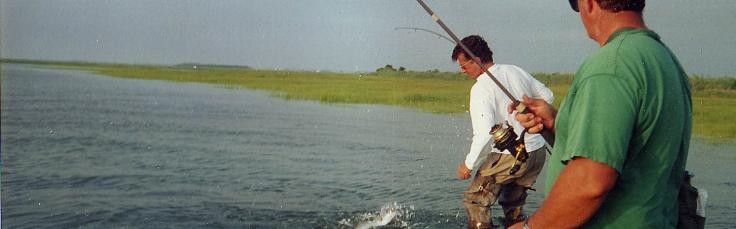
  This guy can catch fish!


Blues,stripers and specs!/? that is what is on tap today in Cape May County. I received reports of big blues in the surf along with short and keeper bass to 24 pounds.The blue fishing is the best that it has been in a few years. Much better than last fall. It was sure nice to see a spring time spec caught. A 29″ spotted sea trout  was caught today by the fisherman pictured above with the bluefish.If you enjoy catching blues and stripers tomorrow would be good day to be fishing. Stripers are being caught on bottom rigs with clam as bait. Live herring is best, you will need time to catch your own. I do not know of any tackle shops that sell live herring. Bucktails have been taking bass also but not as many keepers as the clam. Tog are being caught around the cold spring jetty. A 20″tog was taken from the grassy sound marina fishing pier yesterday. A 10.5 pound tog was caught behind Avalon Monday.The flounder are in the back bays and should continue to stack up until opening day May 29. Some guys like to hit their flounder holes before the season and catch and release the fish. This pressure will push the flounder out of the hole they are fishing.It is best to leave the flounder be until opening day.
 

Kensdock report: The conservation/fishing United States president.


Fishing buds laud ‘conservation president’

By JOE HOLLEY

April 20, 2010, 10:31PM


From left, Robert Rich Jr., a writer and fisherman; Andy Mill, a tarpon angler; Paul Dixon of the Anglers Club of New York; and Johnny Morris, founder of Bass Pro Shops, share fishing stories as a photograph of former President, George H. W. Bush, is displayed with a tarpon.

They called him “the fishing president” back when George Herbert Walker Bush occupied the White House. An avid fisherman for more than 80 years, Bush angled for tarpon off Boca Raton, peacock bass in Brazil, albacore off Harper’s Island, N.C., bone fish off the Florida Keys, among countless other fishing adventures throughout the world.

Now that he’s 85 and his days in the stream are behind him, several of the president’s old fishing buddies decided to come to him Tuesday night. In a program at the George Bush Presidential Library at Texas A&M University, they helped him relive a few of their many fishing adventures.

In brief remarks to an audience of about 500 at the library auditorium — old anglers, Boy Scouts and the general public — Bush himself, a self-described “fishing fanatic,” recalled hooking a chipmunk while fishing at Kennebunkport, but more often than not, said his friend Robert Rich Jr., founder of Rich Foods, the former president knew what he was doing. He was unfailingly modest, though, Rich recalled. After a day of fishing, he’d occasionally report that he was up against “Saddam Hussein fish — they always close their mouths when I come around.”

His father taught him to fish and he kept it up through his presidency and until just a few years ago.

“It means a lot,” he recalled in a film clip made while he was still president. “I like to get away and I like to be totally isolated — no telephones, no TVs.”

“The Secret Service — he used to drive ’em crazy,” said Bass Pro Shops founder Johnny Morris. “If there was a hurricane coming, it was a good sign. He’d go fishing.”

Perhaps Bush’s favorite game fish was the tarpon, creatures that weigh up to 300 pounds. Andy Mill, a former Olympic alpine skier and a Bush fishing buddy for more than 20 years, recalled the former president tangling with a 6-foot-long, 135-pound tarpon off the Florida Keys in 2008. Bush landed the fish after a 45-minute struggle.

“This tarpon was a huge thrill,” Bush said in a film clip.

Morris lauded his longtime fishing buddy as the man who had more to do with bringing back the striped bass than anybody.

“He’s our conservation president,” Morris said. “People would be amazed about this, but President Bush established more national wildlife refuges than any other president, including President [Theodore] Roosevelt. He established 56 new wildlife refuges in America. President Bush restored and protected 3 million acres of wetlands during his tenure. …”


Kensdock report:Last herring canned in USA

By CLARKE CANFIELD, Associated Press Writer Clarke Canfield, Associated Press Writer

PROSPECT HARBOR, Maine – The intensely fishy smell of herring has been the smell of money for generations of workers in Maine who have snipped, sliced and packed the small, silvery fish into billions of cans of sardines on their way to Americans’ lunch buckets and kitchen cabinets.

For the past 135 years, sardine canneries have been as much a part of Maine’s small coastal villages as the thick Down East fog. It’s been estimated that more than 400 canneries have come and gone along the state’s long, jagged coast.

The lone survivor, the Stinson Seafood plant here in this eastern Maine shoreside town, shuts down this week after a century in operation. It is the last sardine cannery not just in Maine, but in the United States.

Lela Anderson, 78, has worked in sardine canneries since the 1940s and was among the fastest in sardine-packing contests that were held back in the day. Her packing days are over; now she’s a quality-control inspector looking over the bite-sized morsels in can after can that passes by her.

“It just doesn’t seem possible this is the end,” Anderson lamented last week while taking a break at the plant where she’s worked for 54 years. She and nearly 130 co-workers will lose their jobs.

Once considered an imported delicacy, sardines now have a humble reputation. They aren’t one species of fish. Instead, sardines are any of dozens of small, oily, cold-water fish that are part of the herring family that are sold in tightly packed cans.

The first U.S. sardine cannery opened in Maine in 1875, when a New York businessman set up the Eagle Preserved Fish Co. in Eastport.

Dozens of plants soon popped up, sounding loud horns and whistles to alert local workers when a boat came in with its catch from the herring-rich ocean waters off Maine. By 1900 there were 75 canneries, where knife-wielding men, women and young children expertly sliced off heads and tails and removed innards before packing them tight into sardine tins.

These days most of the canning is automated and the fish are cut with machines, though still packed by hand. The Stinson packers are all women because they are thought to have stronger backs and better dexterity than men, according to plant manager Peter Colson.

Inside the spacious Stinson plant, dozens of workers in hairnets, aprons and gloves sort, pack and cook the herring that stream along flumes and conveyors. The fish are blanched in a 208-degree steamer for 12 minutes and later, cooked in sealed cans at about 250 degrees for 35 minutes.

Ear plugs muffle the cacophony of clanking cans, rattling conveyor belts, rumbling motors and hissing steam. A fishy smell hangs in the air. Outside, a billboard-sized sign of a fisherman in yellow oilskins holding an oversized can of Beach Cliff sardines, the plant’s primary product, serves as reminder of Maine’s long sardine history.

Colson has been in the sardine business for 38 years. He got his first job as a youngster at another cannery, an hour’s drive away, where his father was the manager.

“This is it. We don’t have any more,” Colson said as he watched workers swiftly pack cans in assembly line fashion. “It’s not easy seeing this go.”

Production at Maine canneries has been sliding since peaking at 384 million cans in 1950. Faced with declining demand and a changing business climate, the plants went by the wayside one by one until, five years ago, the Stinson plant was the last one standing. Last year it produced 30 million cans.

Still, it came as a surprise to employees when Bumble Bee Foods LLC — which has owned the facility since 2004 — announced in February that the plant would close because of steep cuts in the amount of herring fishermen are allowed to catch in the Northeast. The New England Fishery Management Council set this year’s herring quota at 91,000 metric tons — down from 180,000 tons in 2004 — because of the uncertain scientific outlook of the region’s herring population.

Shortages have forced San Diego-based Bumble Bee to truck in much of the herring needed at the Maine plant from its other cannery in Blacks Harbour, New Brunswick, and from herring suppliers as far away as New Jersey.

Even without the quota cuts, the plant was under pressure from shrinking consumer demand, increased foreign competition from countries with lower labor costs — primarily from China and Thailand — and thin margins and low prices on the retail market.

Sardines at one time were an inexpensive staple for many Americans who packed them into their lunchboxes and enjoyed a can or two — or perhaps a sardine sandwich — for lunch. The fish — usually packed in oil or in sauces such as mustard, hot sauce, tomato or green chilies — can still be had at supermarkets for a little over $1 a can, but they’re not in too many lunch pails these days.

Ronnie Peabody, who runs the Maine Coast Sardine History Museum in the town of Jonesport 35 miles up the road from the Stinson plant, has a cookbook published in 1950 called “58 Ways to Serve Sardines.” It includes recipes for sardine soup, sardine casserole, baked eggs and sardines, and creamed sardines and spinach.

Sardine consumption began falling decades ago, he said, after canned tuna came on the market and Americans’ tastes changed. The closing of the last U.S. cannery is the end of an era, he said.

“It’s like reading an obituary in the paper,” he said. “It’s really sad, but what can you do?”

When the last sardine can is packed on Thursday, plant workers say it’ll be like a family being split up.

Many of the employees have worked together for decades. Anderson, a tiny woman with strong hands and a strong back from years of packing small fish pieces into cans, said she’ll be leaving behind close friends when the plant closes.

But she won’t much miss the sardines, which she doesn’t eat.

“I’m not saying I hate them,” she said, “I’m just saying I’m not a big eater of them.”

Talks are in the works to sell the plant to another company to process lobster or other seafoods. Bumble Bee has invested more than $11 million in the plant in recent years, and there’s a work force at the ready.

Bumble Bee operates one of the last two U.S. clam canneries, in Cape May, N.J., and of the last two domestic tuna canneries, in California. But the days of sardine canning in the U.S. are probably gone, said Chris Lischewski, Bumble Bee’s president and CEO.

“I would never say never, but I’d say it’s pretty unlikely,” Lischewski said in a phone interview from California.

In Monterey, Calif., a group of self-described “sardinistas” has taken on the task of trying to get Americans to eat more sardines. It was in Monterey where sardine canneries were made famous in John Steinbeck’s 1945 novel, “Cannery Row,” about the misfits and outcasts on a street lined with sardine canneries.

The group is formulating a business plan in hopes of returning “the lowly sardine to the American palate,” said Mike Sutton, a vice president at the Monterey Bay Aquarium, who says sardines — high in beneficial omega-3 fatty acids, low in contaminants — are among the healthiest seafoods around.

But not canned sardines. Sutton’s group wants to promote fresh sardines sold at white-tablecloth restaurants or in foil packs or in prepared foods at retail stores, much the way tuna and salmon are now sold.

“We recognize the American public turns their noses up at sardines,” Sutton said. “It may be a challenge and it may be insurmountable, but our motto is ‘It’s not your grandfather’s sardin
Kensdock Report: Roffer’s update April offshore conditions look promising

ROFFER’S OCEAN FISHING FORECASTING SERVICE, INC.

TOLL FREE 800 677-7633 & (321) 723-5759 – FAX (321- 723-6134)

//WWW.ROFFS.COMROFFS™ FISHERIES OCEANOGRAPHIC ANALYSIS

UPDATED ON TUESDAY 13 APRIL 2010

SPECIAL UPDATE – APRIL CONDITIONS LOOK PROMISING

We are providing this free update so you are aware of the favorable conditions we are monitoring

over the Oceanographer Canyon to Veatch Canyon areas. Please feel free to pass this on to nonsubscribers.

See the color enhanced satellite image on page two of this note. The sea surface

temperature (sst) of the Gulf Stream is 76°F off Cape Hatteras and 71°F southeast of Cape Cod. We

had been monitoring a clockwise rotating eddy southeast of Cape Cod during February and March

and were concerned when the Gulf Stream appeared to sweep away the eddy during the last several

days. However, the eddy now has a sst of 69°F-67°F and is centered south of Oceanographer

Canyon and some of the water (60°F) from the eddy extends to the Atlantis Canyon. Do not charge

out there yet as the surface water is mostly green colored due to the enriched phytoplankton bloom

that occurs each spring (spring bloom). However, during the next week or so the Gulf Stream will be

interacting with this eddy again bringing 76°F blue water and a substantial amount of tuna. There has

been very good bluefin tuna, yellowfin tuna and bigeye tuna the last three days east of Cape Hatteras

and we anticipate that these fish will migrate with the Gulf Stream. In addition, the conditions in the

Bahamas suggest that more fish are on their way north in the Gulf Stream as well. For those who

attended seminars this winter where we spoke you will better understand this. If not read the article

printed in the recent BBC Teaser Magazine “Bahamas Forecast 2010” found on our website

(

This means that if you have not already started to prepare your vessel and fishing gear (new line,

new drag washers, new leaders, etc. etc) for fishing this season, it is time that you start. Depending

on how the Gulf Stream interacts with the eddy we anticipate that the eddy will be over the Atlantis

Canyon area in four weeks and farther west shortly after that. The canyon areas from the Hudson

Canyon to Virginia could see their own eddy if another eddy one forms. So be on the lookout. We will

be monitoring the conditions every day, 24 hours a day as usual using all the U.S. NOAA, NASA and

European satellites with infrared, visible (color), and other sensors (secret stuff).

http://www.roffs.com/Articles.html).It is not too late to subscribe to a pre-paid discount plan and save a substantial amount of

money. While you will save money with a pre-paid plan, you can order and/or purchase your

fishing analyses individually from our office or from our website (

on Order Analyses button) or by email

11:59 AM, so please call.

DEMAND BY WED: 5:00 PM. During the main summer season we will be open six and seven days a

week. Requests for analyses on Saturdays should be called by noon on Saturdays during May/June

and 1:00 PM during July-August so we can schedule our staff’s hours. During the week order new

areas by 3:00 PM. Summer hours Monday – Friday will be 9:00 AM – 9:00 PM.

http://www.roffs.com/ (click. Verbal updates are always free between 10:30 AM andSPRING office hours: Mon. – Fri. 9:00 AM – 06:00 PM. Saturday hours BYREMEMBER THAT EVERY FISHING TRIP IS IMPORTANT TO GET THE UP TO THE MINUTE

FISHING FORECASTING ANALYSES WE PROVIDE. YOU CAN NOT DUPLICATE OUR

INTERPRETIVE ANALYSES FROM THE LIMITED DATA YOU CAN GET ON THE INTERNET!

BY THE TIME YOU READ ABOUT IT ON THE BLOGS AND WEBSITES, THE BEST FISHING

ACTION WILL BE OVER.

Kensdock Report: Striper bite red hot

The striper bite is red hot in the Delaware Bay. Boats from Cape May NJ are catching in the area of  Number 1 buoy, just outside of the Maurice river. All the sharps are limiting out easily. Clam is the bait most are using followed by blood worms. What I use for bait for stripers this time of year is live herring. Hands down the best striper bait. A few keeper bass have been caught from reeds beach and higbees beach. I do not know of any keepers being caught from Stone Harbor or Avalon beach front. I saw a few commercial crabbers today in the back bay putting out their gear for blue claws. They will load up the back bay areas with pots from now until memorial day. Most crabbers move all their gear to the Delaware Bay once the water warms up and the crowds show up. Some tog have been caught the last couple of days around the Ocean drive bridges with one tog hitting six pounds on the scale. I have not put my boat in the water yet due to the fact I have an unusual amount of work to do around my property due to the winter storms. There should be a few tide runner weakfish around the back bay areas of Cape May co.. With this record warm sunny weather the first weakfish should be caught soon. The weakfish population is severely depleted, however  if you apply  effort with local knowledge  you still have a chance at a tide runner weakie. The best news I heard on weakfish was from the upper Delaware Bay late last summer, I had very reliable reports of a few fishermen limiting out every trip. I also had solid information from the Barnegat bay with reports of limit catches last summer.. The Barnegat Bay had a  large school of weakfish rooming around last August. I found this information as great news! Due to the fact that  some traditional weakfish spots are completely void of any weakies. Hopefully the new weakfish regulations will help. Recreational fishermen have a one weakfish bag limit per day with a 13″ keeper size. Commercial is 100 pounds per trip 13″.We always have a good run of spike weakfish in the ocean in  the fall yet they never return in the spring. Hopefully the 100 pound per trip commercial limit will save a  few of the fall spike weakfish. I am betting if given a chance the spike weakfish will return in the spring.

Kensdock Report:NOAA Annouced a $10 Million Program to Preseve Fishing

NOAA Annouced a $10 Million Program to Preseve Fishing

NOAA announced today an additional $10 million to preserve fishing opportunities for the New England fishing industry and continue the development of a new catch share program in the groundfish fishery. Over the last two years, a total of $47.2 million has been committed to the groundfish fishery and the transition to sectors. Of the $10 million that was provided by Congress, $5 million will go directly to the commonwealth of Massachusetts and the states Rhode Island, New Hampshire, and Maine to set up permit banks. A permit bank is a collection of fishing permits purchased and held by an organization to provide access rights such as days-at-sea and annual catch shares for qualifying fishing vessels.

“By working together with the states, we hope to provide the small fishing vessels and small, local communities with increased access to capital, so they can more effectively fish healthy stocks,” said Eric Schwaab, NOAA assistant administrator for NOAA’s Fisheries Service.Permit banks are expected to provide owners of fishing vessels with limited or no groundfish fishing history an opportunity to lease additional fishing days or allocation at a reasonable cost. This will make it much more economically viable for small fishing vessels and local communities to remain a vital part of New England fisheries.

The $10 million from Congress also includes $546,000 in direct aid for fishing sector managers and vessel operators, adding to the $954,000 already allocated to offset sector startup and operational costs in 2009 and 2010.

In addition, the $10 million includes nearly $4 million for dockside and at-sea monitoring, which will create jobs for monitors and observers in local communities. Finally, $485,000 will go to NOAA’s Fisheries Service for infrastructure and programmatic support.

Kensdock report:Was the voice of the people heard today? New Jersey Assembly approved FREE registry bill today

 
Assembly today approved a bill (A823) to create a free, state-run saltwater angler registry in New Jersey. The vote by the New Jersey Assembly (54 in favor, 16 opposed, 6 abstain).
 
Considering the number of supporters a NJ saltwater license has, was the will of the people heard today in the NJ assembly? or was it special interest groups?
Hunters and fishermen had the foresight to buy thousands of acres of New Jersey wildlife management areas  during the tough years of the great depression. Today many sport fishermen are applying the same foresight and realize the importance of investing in our natural marine resources via a New Jersey Saltwater license. A few of  the Saltwater angler groups that have voiced their support of a New Jersey saltwater license are:
 
The largest saltwater angler group on the east coast CCA supports a saltwater license {100,000 members}
 
The New Jersey federation of sportsmen’s clubs supports a saltwater license  {150,000 members}
 
The Cape May County party and Charter boat association supports a NJ saltwater license {8,000 members}
 
The New Jersey Marine Fisheries council voted 5-2 in favor of a NJ saltwater fishing license.
 
A recent poll taken on the 24,000 member online fishing club the Bass Barn ,taken after a long debate on the issue, favored a saltwater license. 


Kensdock Report: Acting DEP commissioner Bob Martin testifies

DEP ACTING COMMISSIONER TESTIFIES BEFORE THE SENATE JUDICIARY COMMITTEE

(10/P15)  TRENTON – New Jersey Department of Environmental Protection Acting Commissioner Bob Martin delivered the following testimony at his confirmation hearing today before the New Jersey Senate Judiciary Committee:

Mr. Chairman and Members of the Senate Judiciary Committee:

I want to thank you for having me here today to discuss my candidacy to be the next Commissioner of the Department of Environmental Protection. I thank all the members of the committee who took the time to meet with me either in person or by phone. I want to also thank Governor Christie for his confidence in nominating me for this distinguished position.

I am very excited about taking on this position*and if confirmed, I will work to advance DEP’s core mission of protecting and preserving the environment of NJ. At the same time I will help the DEP fulfill its role in growing the economy of this state.

I am personally committed to ensuring that the DEP protects our water, air, ocean, natural resources and beaches, and that we rapidly clean up contaminated sites and ensure we have plenty of open space for future generations.

I bring an extensive array of skills and experience to help protect the environment and natural resources of the state, while significantly improving the operation and performance of the DEP.  DEP desperately needs leadership, management and direction*.and I will bring them that. DEP also needs continuous operational improvements and more technology to be an effective organization to get permits processed quickly, inspections done more timely and to bring predictability and efficiency to all its programs. I bring over 25 years of experience consulting to numerous types of businesses and industries. Most of my consulting work has been in the utility and energy industry.  I have extensive experience in all aspects of business and management consulting, including business strategy & planning, business transformation & re-engineering, IT strategy, systems implementation and change management. I have a pragmatic style and I’m focused on results. I’m also focused on communications!
, transparency and have a willingness to listen to all points of view.

While my resume in strong on management skills, my knowledge of environmental issues and policy is also quite strong. While I was not an environmental consultant, my 25 years in the utility and energy industry gave me extensive knowledge of air, water and land use issues.  In addition, I have extensive experience bringing together differing points of view and stakeholder groups toward resolving complex issues. Taken together, I firmly believe my managerial skills within a large international organization and my extensive involvement with environmental issues have prepared me well to lead the DEP. 

I was also the primary advisor to Governor Christie for both his Environmental policy and Green Energy policy.  These policies included growing “Green Industries and Jobs” significantly, including building Wind Turbines and Solar panels manufacturing facilities here in NJ, while leveraging the State’s outstanding port facilities, protecting NJ’s clean water, protecting our shores, beaches and ocean, and working to ensure Environmental Justice in all our communities.

I take my responsibilities as Acting Commissioner very seriously and, if confirmed will continue to do so throughout my tenure at DEP.  I will enforce the environmental laws of this state to protect the health and safety of all our citizens. At the same time, we must change the way DEP operates.

DEP is broken and needs to be fixed.  I have spoken to most of you on the Judiciary Committee and most of you have shared your “DEP stories”*stories of your challenges and your constituents’ frustrations in dealing with DEP.  We must and we will make dramatic changes to how we fundamentally do business at the DEP. I reject the premise that we must choose between a healthy environment and a vibrant economy.  We can have both with the right leadership and our resolve to changing the old paradigm.

While I have learned a lot over the past 8 weeks at DEP, I recognize I still have a very steep learning curve to get over*.and I’m eager to learn and work with the members of the legislature and the committees that deal with issues affecting our department.

My commitment to all of you in the legislature and the DEP stakeholders, including the environmental community and the business community, is that while we may not always agree*I will always listen and my door is always open.

I look forward with working with all of you over the next four years and addressing your questions here this afternoon.

Thank you.

Kensdock report: Bait fish in the area !

 I noticed  schools of minnows as I was standing on my dock this morning. A good amount of them were  large bullhead minnows. Last year they did not show up at all in my area, for whatever reason. A good run of bait fish early in the spring is a good sign for the upcoming fishing season.The fiddler crabs are awake and on the move. My black lab puppy {Chase} was the first to notice the fiddler crabs. In no time, he was crunching down fiddler crabs and was covered in black mud with only the whites of his eyes showing. The water at my dock is crystal clear and is 45 degrees. There has been a few small stripers caught in the back bay area but to the best of my knowledge no keepers have been taken in Avalon,Stone Harbor, Cape May or the Wildwoods. I have not received any phone calls from bragging power plant striper sharps, so more than likely the striper bite is on at the power plant.

Kensdock report:The united boatmen and the Recreational Fishing Alliance oppose a NJ saltwater license. Who’s side are they on?

 
In New Jersey the groups that represent special commercial interest are not so easily identified.The recreational fishing alliance { RFA}  represents commercial interest. The  United Boatmen  also represent commercial interest . These two groups vehemently oppose a NJ saltwater license! This position is in complete disregard of the benefits a NJ saltwater license will bring to the people of New Jersey.These groups are pushing the  free regisration bill , that if passed, will turn out to be the most expensive free legislation ever to be come law in the history of the State of New Jersey.
 
These groups  enjoy a big comfortable seat at the table of  fisheries management in New Jersey today. . They realize what they will be up against if  a saltwater license is approved; a revenue generating, unified, politically powerful constituency of recreational anglers that will change the way of fisheries management in NJ.


Take a look at what can be accomplished with investing money in our saltwater fish stocks http://www.joincca.org/Accomplishments.html
 
Most recreational anglers support a saltwater license according to the polls that have been  taken after long debate on the subject. Taking into consideration precision and bias, the accuracy of the polls are excellent.